

Jamaican Music: The Sounds That Put Jamaica on the World Stage

Holiday Jamaica
14 Sep 2026
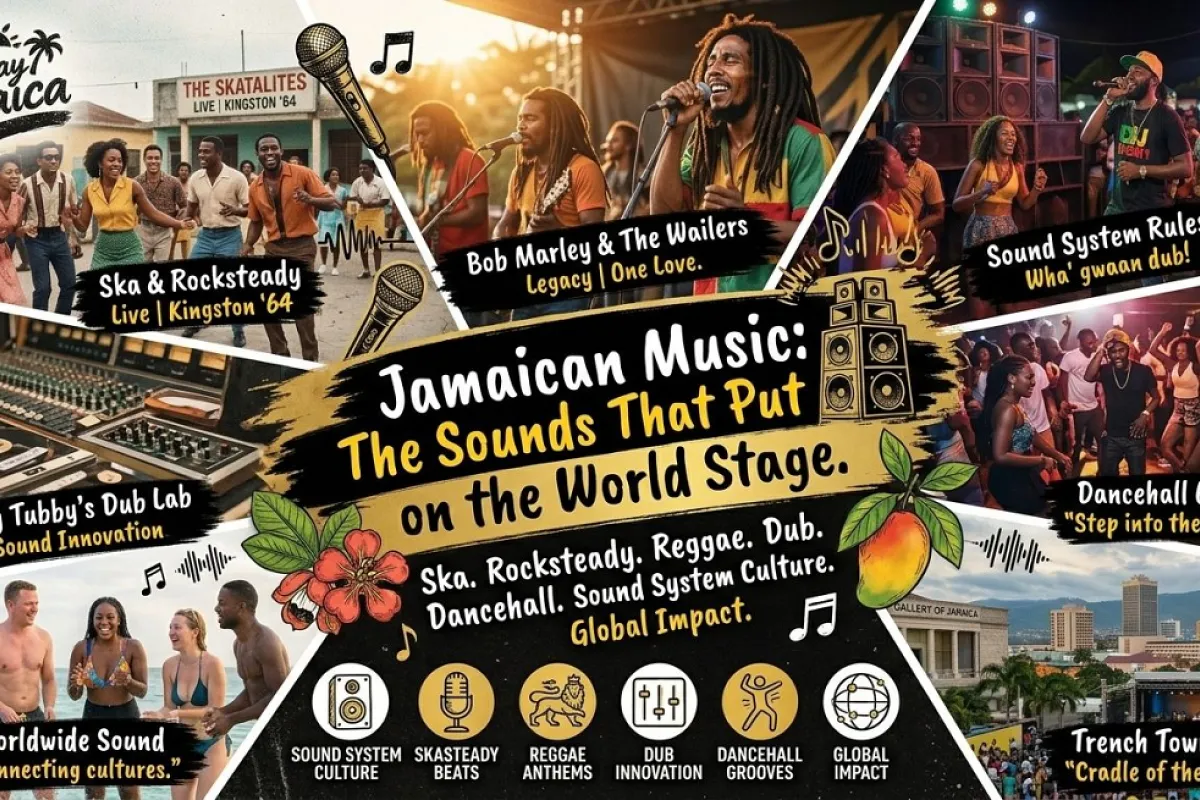
Few countries have had as much influence on global music as Jamaica.
For an island of its size, Jamaica has produced an incredible variety of musical styles that have traveled far beyond its shores. From ska and rocksteady to reggae and dancehall, Jamaican music has shaped popular culture around the world.
But Jamaican music is more than just a collection of genres. It's a reflection of the island's history, culture, struggles, celebrations, creativity, and everyday life.
🎶 Where Did Jamaican Music Come From?
Jamaican music developed from a blend of African, European, and Caribbean influences.
African musical traditions brought rhythms, call-and-response patterns, percussion, and storytelling traditions. These influences mixed with European instruments and musical styles to create something distinctly Jamaican.
Over time, musicians and producers in Jamaica continued experimenting with rhythm, bass, vocals, and sound-system culture, giving birth to several genres that would eventually become internationally famous.
🇯🇲 Mento: One of Jamaica's Earliest Popular Sounds
Before ska, reggae, and dancehall, there was mento.
Mento developed in Jamaica during the 20th century and incorporated African and European musical influences. It often featured acoustic instruments such as banjo, guitar, hand percussion, and the distinctive rumba box.
Mento songs frequently told humorous stories about everyday Jamaican life.
Although it isn't as internationally famous as reggae, mento is an important part of the foundation of Jamaican popular music.
🎺 Ska: Jamaica Finds Its Sound
By the late 1950s and early 1960s, ska emerged as one of Jamaica's first internationally recognized popular music genres.
Ska combined elements of mento, American rhythm and blues, jazz, and Caribbean music. Its energetic rhythm and prominent horn sections created a distinctive sound.
Ska also became closely connected with Jamaica's independence era, making it an important part of the country's cultural history.
🎵 Rocksteady: Slowing Things Down
Rocksteady followed ska in the 1960s.
As the name suggests, rocksteady generally had a slower, smoother feel than ska. Bass lines became particularly important, while vocal groups played a major role in the genre.
Rocksteady had a relatively short period at the center of Jamaican popular music, but its influence can still be heard in reggae and other forms of Jamaican music.
🌿 Reggae: Jamaica's Global Sound
When many people think about Jamaican music, reggae is probably the first genre that comes to mind.
Reggae developed in Jamaica during the late 1960s and became one of the country's greatest cultural exports.
Its strong bass lines, distinctive rhythms, and socially conscious lyrics helped reggae reach audiences across the world.
Reggae became associated with themes such as:
- Peace
- Love
- Social justice
- Spirituality
- Freedom
- African identity
- Everyday Jamaican life
The music eventually became much more than a Jamaican genre—it became a global musical movement.
🌍 Bob Marley and the Global Rise of Reggae
No discussion of Jamaican music would be complete without mentioning Bob Marley.
As a member of The Wailers and later as a solo performer, Marley helped introduce reggae to an enormous international audience.
His music connected Jamaican musical traditions with messages about peace, unity, freedom, and social justice.
Today, Marley remains one of Jamaica's most internationally recognized cultural figures.
🔊 Sound-System Culture
One of the most important parts of Jamaican music history is sound-system culture.
Sound systems allowed DJs and selectors to bring music directly into communities. Large speakers, DJs, exclusive recordings, and energetic crowds created an environment where new musical ideas could develop.
Sound-system culture also helped give rise to the Jamaican practice of DJs toasting over instrumental tracks—a tradition that would have a major influence on later Jamaican music and, eventually, hip-hop.
🎤 Dancehall: A New Generation of Jamaican Music
By the late 1970s and especially during the 1980s, dancehall emerged as a major force in Jamaican music.
Dancehall placed greater emphasis on DJs, riddims, sound systems, and contemporary Jamaican life.
The genre continued evolving throughout the 1990s, 2000s, and beyond, producing artists who brought Jamaican music to new generations of listeners around the world.
Dancehall has also influenced international pop, hip-hop, electronic music, and other genres.
🥁 Dub: The Art of Remixing Sound
Dub developed from reggae and became famous for experimenting with instrumental versions, heavy bass, echo, reverb, and other studio effects.
Jamaican producers and engineers transformed the recording studio into an instrument of its own.
Dub's approach to manipulating existing recordings would later influence genres including electronic music, hip-hop, and remix culture.
🎼 Gospel, Ska, Reggae and More
Jamaica's musical landscape extends well beyond the internationally famous genres.
You'll find Jamaican musicians working in:
- Gospel
- Jazz
- R&B
- Soca
- Dancehall
- Reggae
- Ska
- Rocksteady
- Dub
- Roots reggae
- Reggae fusion
- Reggae gospel
- Contemporary pop
The island's musical creativity continues to evolve as new generations experiment with different sounds.
🎧 Jamaican Music and the World
Jamaica's influence on global music is enormous.
Jamaican production techniques, bass-heavy rhythms, sound-system culture, DJing, and vocal styles have influenced musicians and producers across the Caribbean, North America, Europe, Africa, and beyond.
The island's musical influence can be heard in everything from hip-hop and electronic music to pop and modern Caribbean music.
🇯🇲 Experience Jamaican Music in Jamaica
One of the best ways to understand Jamaican music isn't simply by listening to recordings—it's by experiencing the culture that created it.
Music can be found throughout Jamaica at:
- 🎤 Live concerts
- 🎶 Festivals
- 🔊 Sound-system events
- 🏖️ Beach parties
- 🎧 Clubs
- 🏘️ Community events
- 🎸 Live music venues
- 🎉 Cultural celebrations
Kingston, in particular, has played a major role in Jamaica's musical history and remains an important center for the country's contemporary music scene.
🎵 Music Is Part of the Jamaican Experience
Jamaican music is deeply connected to the island's identity.
From the acoustic sounds of mento to the energetic rhythms of ska, the soulful sounds of rocksteady, the global influence of reggae, and the modern energy of dancehall, Jamaica has continuously found new ways to express itself through music.
So when you visit Jamaica, don't just listen to the music from your hotel room.
Go where the music is.
Experience the rhythms, meet the people, explore the communities, and discover the sounds that helped put Jamaica on the world stage.
Jamaica isn't just an island of beautiful beaches and breathtaking landscapes. It's an island with rhythm in its soul.
Search
Categories
Accomodations
(1)
Activity
(29)
Arcade
(6)
Entertainment
(8)
Experiences
(20)
Food
(13)
History & Heritage
(26)
Lifestyle
(20)
Park
(6)
Restaurant
(13)
Rivers
(17)
Travel
(15)
Related Posts

Holiday Ja...
24 Jan 2026
Holiday Ja...
30 Jan 2026
Holiday Ja...
08 Feb 2026